A Note from the Atelier: A look into how we prepare and welcome children for their first visits
What happens in the Atelier?
Once the children have settled into their new classroom spaces at the start of the year, they then begin to venture out to other parts of the school in small groups. One of those special places is the Atelier.
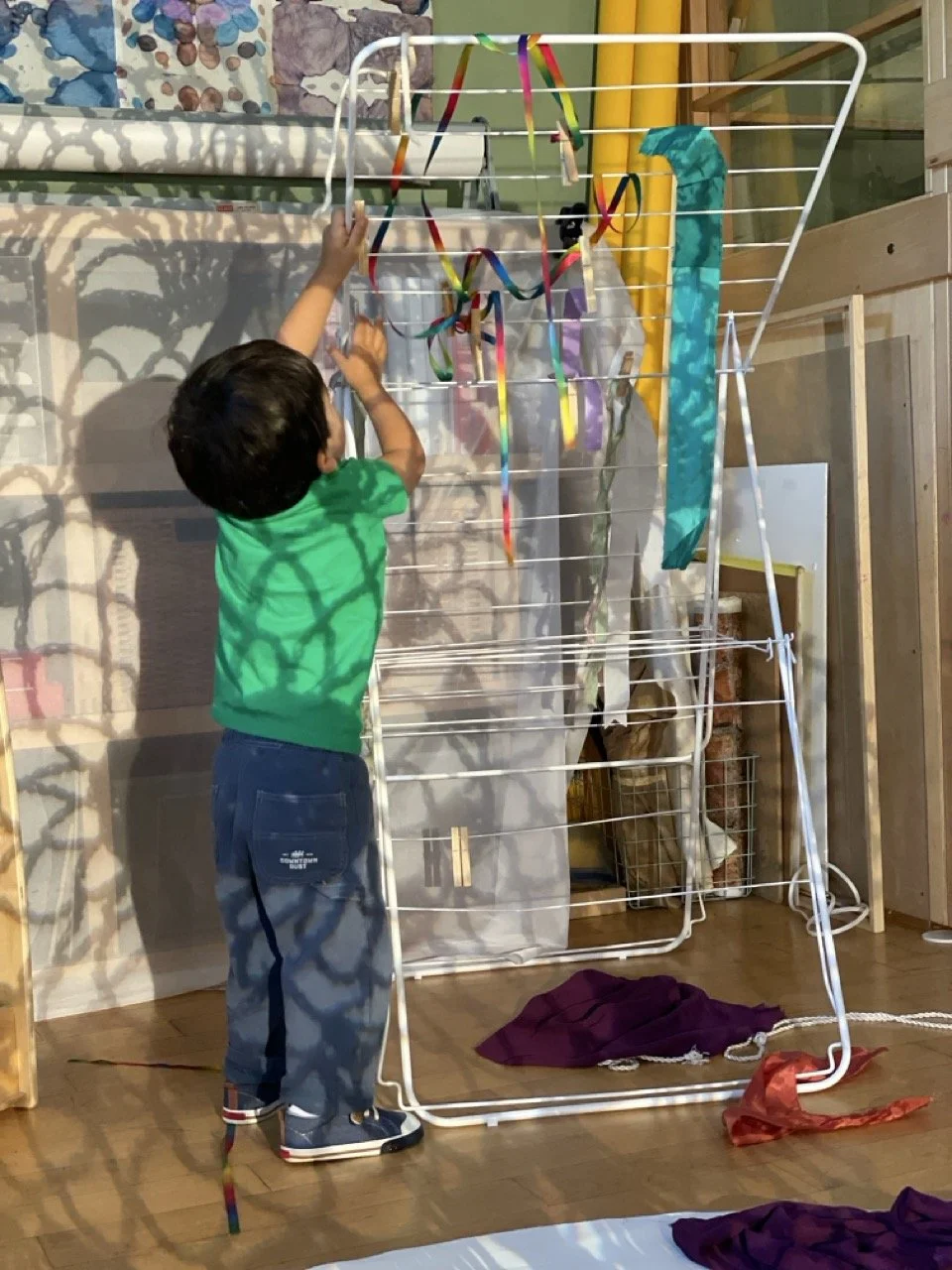
The Atelier can be understood in many different ways, appropriately reflecting its adaptive nature. It can be thought of as a mini, concentrated version of what happens in the classroom everyday, or as a laboratory where children test out theories through the use of materials. I especially love to think of it as the place where children have ample time and space to explore The Hundred Languages, as they are known in the Reggio Emilia Approach.
The Hundred Languages may be traditional art mediums such as drawing, painting, or clay, or they may be non-conventional materials without prescribed purposes such as loose parts or recycled objects. They may also be non-material or temporal such as sound, light, or movement. No matter the investigation, the Atelier is a place where the children can expect invitations to problem-solve, share ideas, and explore freely. Working in this way, we gain a special window into their imaginations, experiences, and ideas about the world.
A Material Investigation Begins
I began the year by clearing the Atelier of all furniture to support the 2s natural inclination to learn while on the go. With a circular mat on the floor and materials all around, the children began exploring in 360 degrees. And since we must begin somewhere, I decided to start with a material investigation into fabric – soft, comforting, flexible, and malleable. In years prior, this focus has been on materials such as clay and paper.

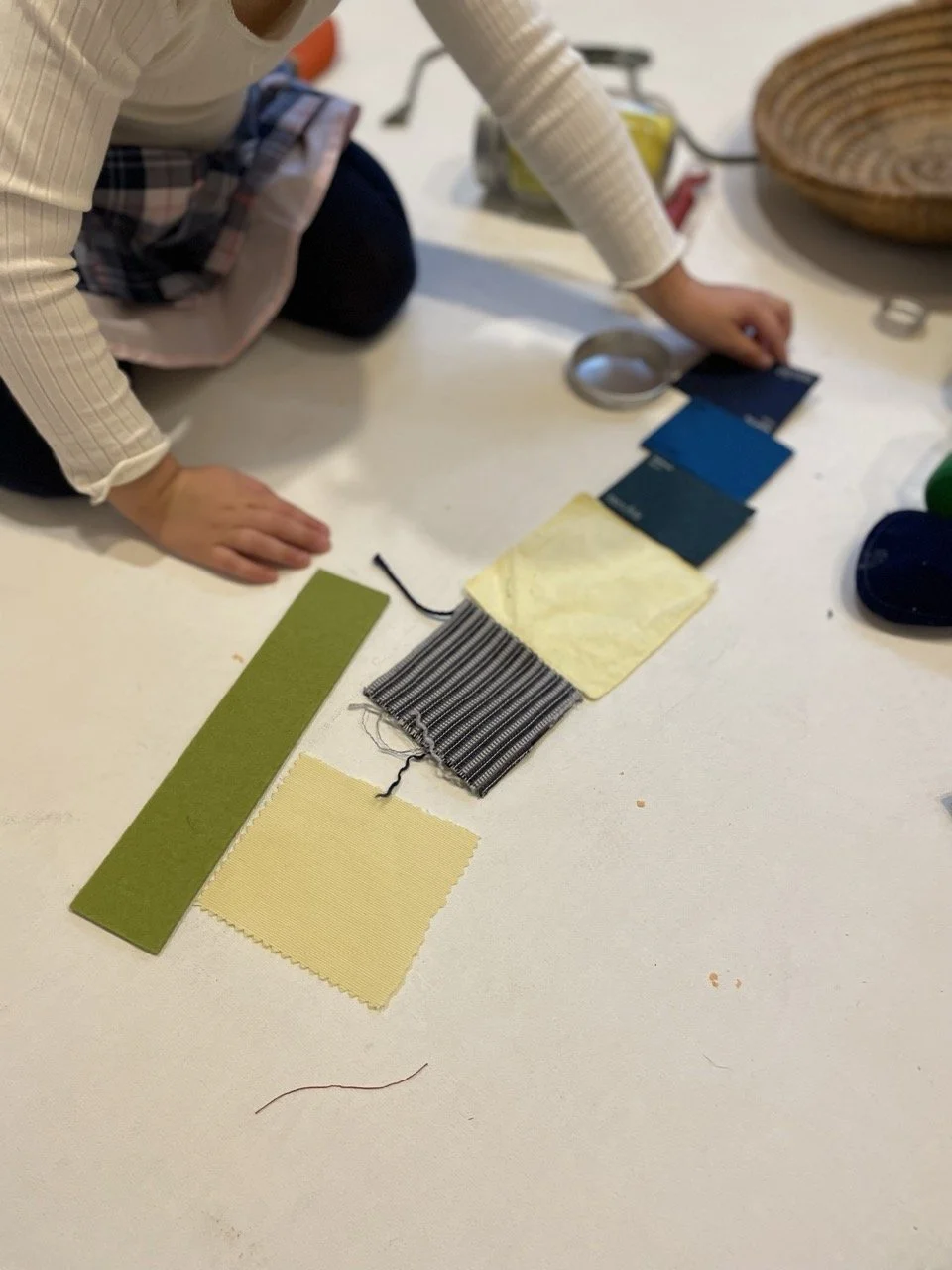
We are always curious to see how the children will interact with one another and with the materials on their first visits. Especially at the beginning of the year, my focus is on looking for patterns that may emerge in their play in order to understand what they are interested in and to inform what materials I offer.
Exploring with our Whole Bodies
Over these first few weeks, I have noticed the children engaging with concepts such as concealing and revealing, connecting, moving, wrapping, stretching, and arranging. A common thread is: how do these materials interact with my body? and How do they alter the physical space around me? They joyfully exclaim “I see you!” and “Find me!” and “I’m stuck!” They experiment with how the different materials move through the air when waved, tossed, and draped.

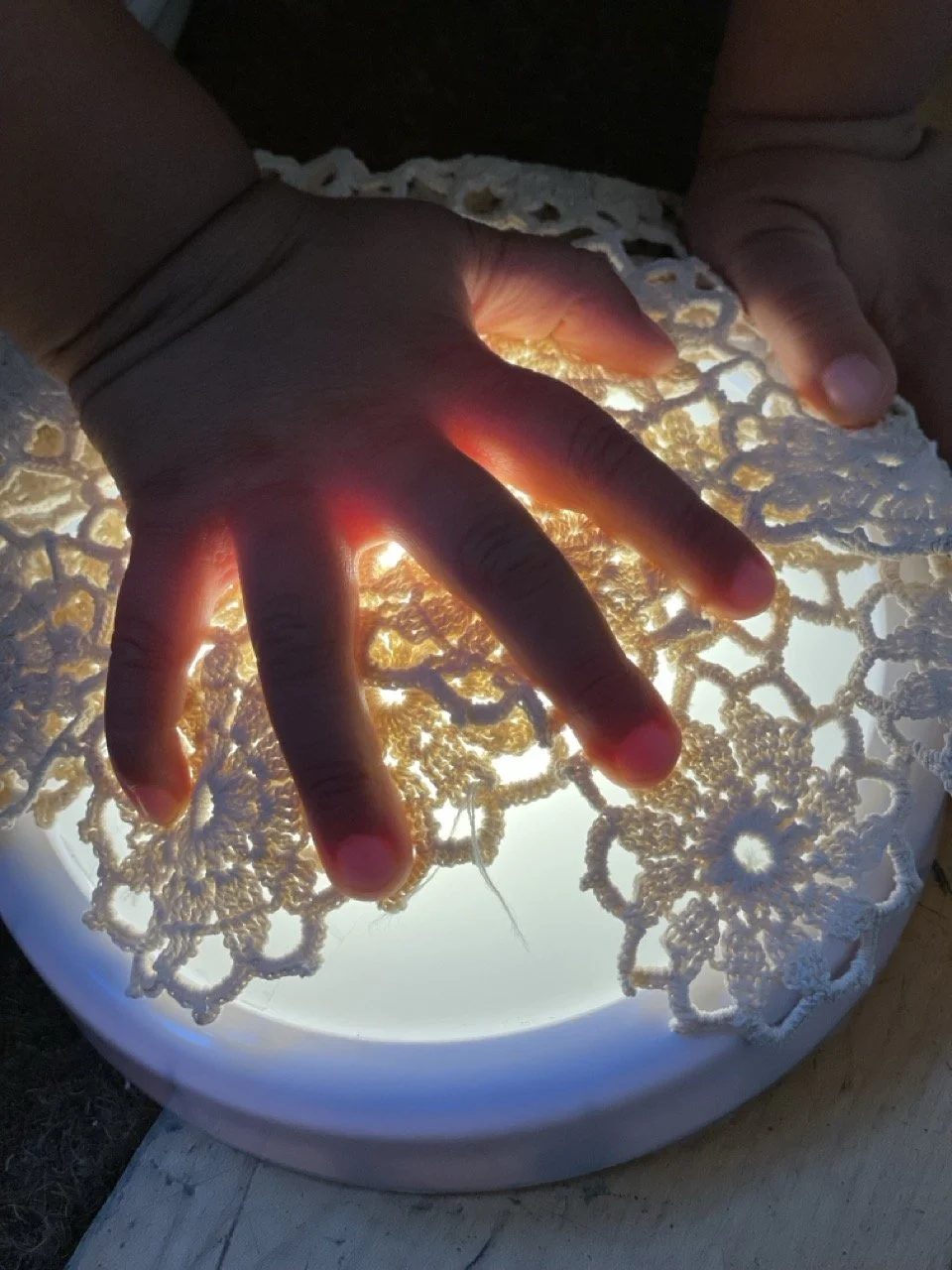
Not only are these rich, creative materials in and of themselves, but they also serve the dual purpose of meeting and challenging the children where they are developmentally. They present opportunities for observing spatial relationships, perceiving the cause and effect of movement, and connecting with peers. While working in the Atelier, the children also learn about the world, themselves, and one another.
Connecting with Contemporary Art and Culture
Many parallels can be drawn between how contemporary artists work and the children’s material explorations at TCS. Artists associate freely between ideas and experiences and create meaning based on their unique worldviews. How might looking at the work of contemporary artists lend us another lens through which to appreciate the work of young children? As an artist and educator, I frequently find affirmation and inspiration in contemporary art.

Images of the immersive textile work of Christo and Jeanne-Claude, as the collaborative couple is known, have been on display in the Atelier for the children to contemplate. Their work often involved interventions of fabric in a landscape on a massive scale.
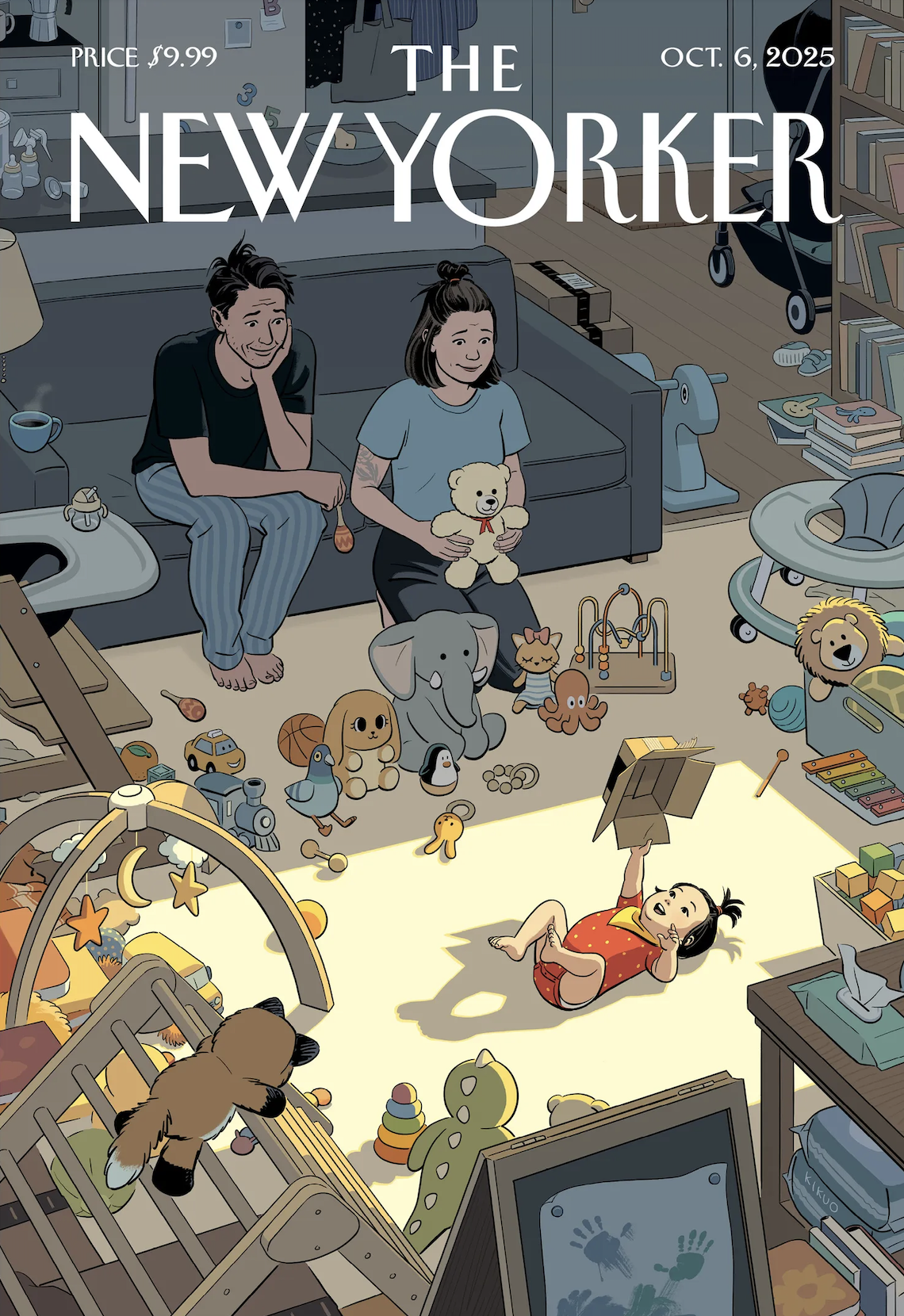
I received a copy of this New Yorker in the mail a few weeks ago and immediately thought “this is what we do!” I love the representation of how, sometimes, it is the simplest of materials that capture children’s fascination.
As we continue our journey throughout the year in the Atelier, I am reminded daily that these early investigations, so often sparked by simple materials, offer profound insight into how children make sense of their worlds. The fabric, the movement, the joyful hiding and revealing all serve as starting points for deeper connections, discoveries, and relationships. In the shared space of the Atelier, we witness the children building not only skills and knowledge, but also a sense of themselves as capable thinkers and creators. And just like the artists whose work inspires us, they show us that meaning can emerge from even the lightest touch of imagination.